
Searching Harding County Civil Dockets
For civil docket research, the public starting point is New Mexico Courts Case Lookup. Expect a redacted district and magistrate case view. It is not a Harding County document store and not a certified court record. You may hit an image-code gate on the current page. The older design still teaches you the public fields: a name in last-first-middle order, a four-part case number, court type, court location, and optional filing or hearing date filters.
Before searching, decide whether the civil matter belongs in Mosquero or Roy. District civil cases carry D | DISTRICT COURT and 1031 - MOSQUERO. A small civil case in Magistrate Court carries M | MAGISTRATE COURT and 23 - ROY - HARDING. The legacy form also has a two-character Case Category field. No public list explains the local values. So skip the guessing once you know the court and location.
- Open Case Lookup and choose the court type and Harding location that match the case.
- Search by party name as last first middle, or use the full dash-separated number shown on court papers.
- Use a date range only when it helps narrow the results, selecting filing date or hearing date as needed.
- Open the matching case to read the register of events, the parties, and the visible hearing or filing detail.
- Ask the Mosquero or Roy clerk for a copy, certification, or other record service that the public view cannot provide.
Harding County Civil Docket Courts
Which court you pick shapes what records you find. The Harding Magistrate Court in Roy takes civil claims under $10,000, plus landlord and tenant matters in the $0 to $10,000 range. The Harding District Court in Mosquero handles everything over $10,000: contract, tort, real-property, estate, domestic-relations, child-support, foreclosure, protection-order, and kinship-guardianship cases. Its general-jurisdiction docket also takes appeals from lower courts.
Probate splits along the same line. Informal or uncontested matters follow a limited county probate path. Contested estates move up to District Court. Harding offers no separate online probate search form, so the District Court clerk or the court finder is the practical first contact when a probate case does not surface through the usual public route.
| Question | First Harding docket | Case Lookup choice |
|---|---|---|
| Civil claim under $10,000 | Roy Magistrate | M / 23 - ROY - HARDING |
| Contract, tort, property, or civil claim over $10,000 | Mosquero District | D / 1031 - MOSQUERO |
| Contested estate or lower-court appeal | Mosquero District | D / 1031 - MOSQUERO |
Inside a Harding County Civil Docket
A civil register entry can show plenty. Case description, number, location, category, type, filed date, judicial officer, and an Open, Closed, or Unknown status all appear. Party roles appear too, such as plaintiff and defendant or petitioner and respondent. Attorney details, aliases, related-case links, and financial fields show up only where the system allows. A user's access rights also matter. Treat a status label as useful context. It is no substitute for reading the recent events.
| Case header | Case number, description, court location, category, type, filed date, judge, and displayed status. |
|---|---|
| Parties | Party names and roles, plus an attorney name or CAID and role where the profile permits display. |
| Register events | Filing date, event type, filing summary, file name, comments, page count, and document-security value. |
| Hearings | Hearing date, setting type, location, judicial officer, linked-document indicator, and events without documents. |
| Related and financial fields | Related case number, style, reason, transaction amount, balance, payments or credits, and receipt information when shown. |
Harding County Civil Docket Events
A civil docket can record complaints or petitions, summonses or citations, service and returns, answers, motions, responses, notices, hearings, continuances, orders, judgments, satisfactions, and notices of appeal. All ordinary procedural concepts. Harding publishes no CMS event-code list. So trust the precise event label that appears in the case. Do not assign a local meaning to an abbreviation.
Events and filings answer different questions. An event may mark a hearing, a reset, or an order the court entered. A filing entry identifies material submitted to the case. Both can carry a date, a type, and a linked-document indicator. Even when the document is closed to the public account, the entry itself still tells you something.
- Service or return
- An event showing service activity or the return associated with it.
- Continuance or reset
- A change to a planned setting that may leave the earlier event visible in the register.
- Judgment
- The court’s entered decision or order resolving all or part of a matter.
- Satisfaction
- An event that can reflect satisfaction of a judgment or obligation.
- Notice of appeal
- A filing that can lead to a distinct appellate or district docket.
Civil Case Types on the Docket
Harding civil records divide by court jurisdiction and case category, not by one countywide clerk database. The public re:Search guide lists Civil, Family, Probate, and Mental Health as available category examples, with location-controlled values beneath them. For the final word, the exact case type in a live result governs.
- Contract, tort, real-property, and foreclosure matters in District Court.
- Domestic relations, child support, protection orders, and kinship guardianship in District Court, subject to access limits.
- Limited civil claims under $10,000 in Magistrate Court.
- Landlord and tenant rights within the magistrate jurisdictional range.
- Informal probate in the county probate structure and contested estates in District Court.
Harding County District Civil Docket
General-jurisdiction civil cases in Harding County are heard by the District Court in Mosquero. That is where the larger claims land. Smaller matters stay with the limited civil court in Roy. The Harding District schedule shows the current day plus six future days of hearings. The calendar rolls forward, so a past setting may drop off it. Don't panic if that happens. Case Lookup can still pull up a case. A hearing date may have passed from the live docket view.
The New Mexico attorney e-filing information describes the filing channel lawyers use. They file there instead of Case Lookup.
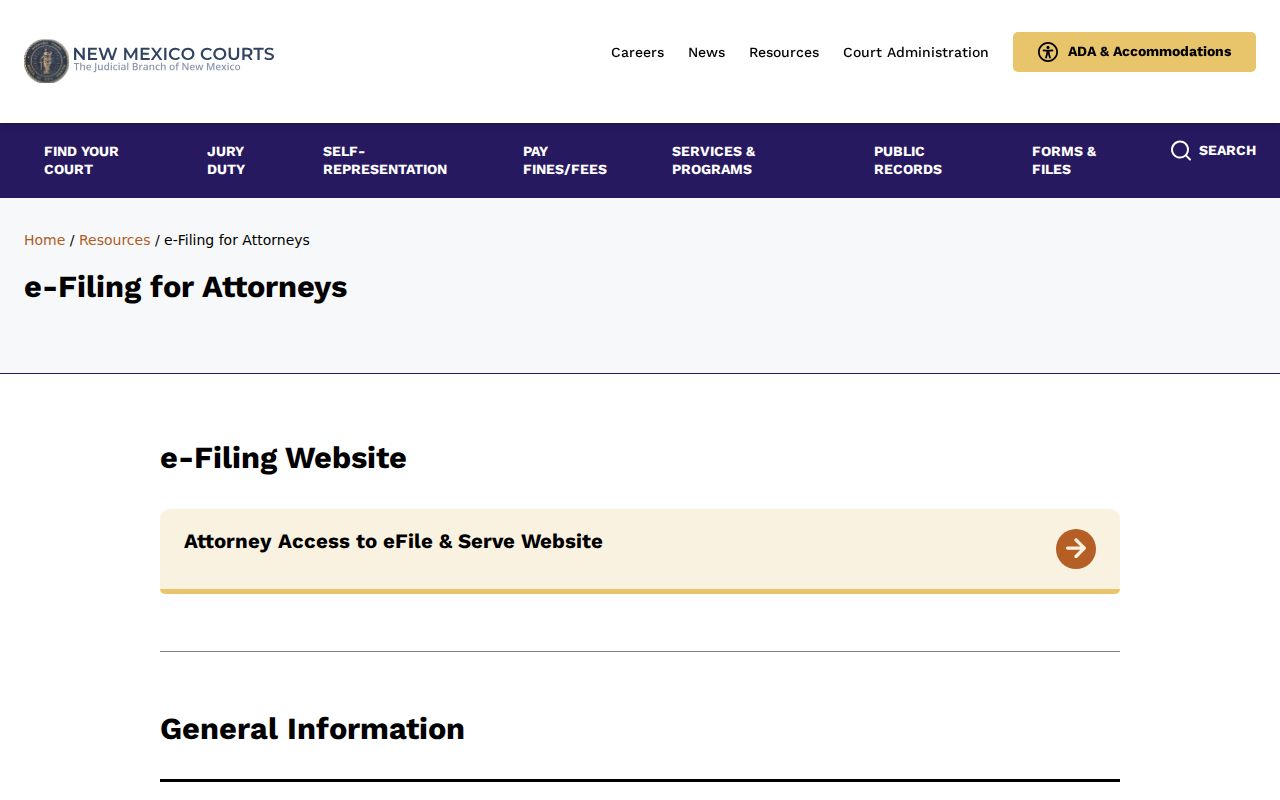
Odyssey File & Serve handles attorney filing. It is not the public portal for reading a Harding County civil docket.
Civil Docket Settings and Hearings
When a civil setting is close, check both the case register and the Tenth District calendar. Case Lookup and re:Search give case-level event history. The schedule page covers only a short rolling window. A continuance or reset stays in the case history even after the hearing date moves. Rely on the most recent signed notice or direct clerk confirmation over an old calendar card. The Roy Magistrate schedule runs separately from Mosquero's District Court calendar. So pick the court first. That keeps a small civil setting from getting confused with a District Court case.
Harding County Civil Docket Copies
An online event register tells you a complaint, answer, motion, order, or judgment was filed or entered. It usually stops there. The full text of the document stays out of view. A docket printout from Case Lookup is not a certified judgment. Need real proof of a judgment, lien, order, or filing? Request a certified or exemplified copy. For a District Court case, ask the clerk in Mosquero. For a Magistrate Court case, ask Roy.
| Copy service | Tenth District fee |
|---|---|
| Ordinary photocopy | $0.35 per page |
| Certification and seal | $1.50 per pleading, plus copy pages |
| Exemplification | $4.50 per pleading, plus copy pages |
Check the Tenth District fee page for current copy costs before you order.
Civil Docket Access Rules
Public Case Lookup shows a redacted civil docket. Do not expect the whole file there. The registered re:Search®NM service offers more: Quick Search plus Cases, Hearings, and Filings views. Filters cover location, category, type, status, filed date, filing type, and file date. Even so, a listed filing or event can sit next to a document you cannot open, because what related-case links and documents display depends on your user profile and each document's security setting.
If something is restricted, a party or attorney should rely on their own authorized profile. Or ask the clerk about lawful access. Changing a search spelling will not surface a sealed, confidential, or unredacted document. The online-access rules limit both what sensitive information appears on screen and what protected material is available at all.
Public-record boundaries:
Rule 1-079 governs public access, redaction, sealing, and protected New Mexico court material.
The online case-access policy distinguishes public, registered, and restricted online access.
The Judiciary IPRA portal accepts properly described judiciary public-record requests subject to exemptions.
Harding County Civil Docket Access
If the online docket leaves questions open, go to the court holding the file. The Tenth District contact page lists the Mosquero District Clerk at 575-673-2252, tenthjdcpublic@nmcourts.gov, and a Mosquero office. The Roy Magistrate office sits at 575-485-2549 and roym-grp@nmcourts.gov. Published contact channels cover in-person visits, mail, fax, phone, and email. Case Lookup plays no role in civil filing for attorneys.
Lawyers file through Odyssey File & Serve instead, and civil e-filing is mandatory in both District and Magistrate courts. The state fee list runs $12 for eFile & Serve, $8 for File Only, and $0 for Serve Only. Emailing proposed text to a judge-specific Tenth address is not a public docket search, and the message alone does not complete a filing. Harding County offers no public civil-docket export, fee-based document store, or third-party county portal. What exists is the docket access described above.
The Odyssey File & Serve landing page is the official attorney filing route tied to New Mexico civil courts.
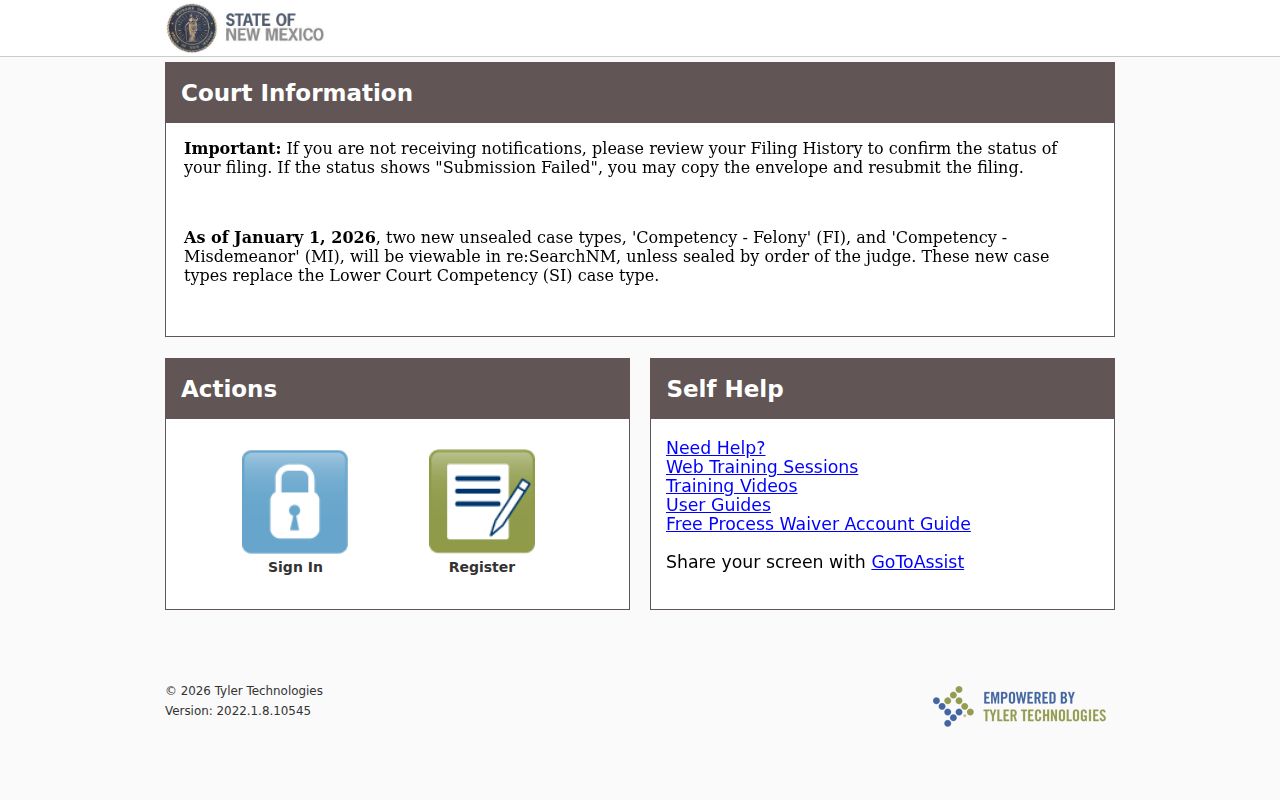
The portal exists for filing by authorized users. For docket reading and record requests, the clerk and the public case-access systems remain the routes.